

I used to think a “glow” was just good lighting and a decent filter. That was before I spent a year testing 14 different toners, accidentally gave myself a mild retinoid burn (twice), and finally understood why my grandmother’s skin looked like pearlised silk even without a drop of makeup. The secret isn’t a single serum. It’s a set of daily rituals that treat your skin like the living, breathing organ it is. In 2026, the Korean glow isn’t about chasing a trend—it’s about building a system that works with your life, your budget, and your actual skin type. I’ve broken down the process into seven non-negotiable rituals. Some you’ve heard of; others might surprise you. Each one comes with a specific time commitment, a budget tier, and the honest truth about whether you can skip it (spoiler: you can skip some, but not the ones you think). Let’s build your 2026 routine from the ground up.
Disclosure: This post contains affiliate links. If you click through and make a purchase, we may earn a small commission at no extra cost to you. Thank you for supporting this site!
10 min read
In This Article
- 1. The Double Cleanse That Actually Respects Your Barrier
- 2. The 7-Skin Method (But Only 3 for Real Life)
- 3. The Essence Sandwich (Your Serum’s Best Friend)
- 4. The Eye Cream Massage (90 Seconds, Not 30)
- 5. The Moisturiser Lock (With a Damp Face Trick)
- 6. The SPF That Does Double Duty (Mineral + Chemical Hybrid)
- 7. The Weekly Reset: Sheet Mask + Gua Sha (20 Minutes)
- Frequently Asked Questions
Key Takeaways
- 1. The Double Cleanse That Actually Respects Your Barrier
- 2. The 7-Skin Method (But Only 3 for Real Life)
- 3. The Essence Sandwich (Your Serum’s Best Friend)
- 4. The Eye Cream Massage (90 Seconds, Not 30)
1. The Double Cleanse That Actually Respects Your Barrier
Most people think double cleansing is about removing makeup. It’s not. It’s about removing the invisible film of pollution, sunscreen polymers, and excess sebum that a single water-based cleanser can’t touch. In 2026, the ritual has evolved: we’re not just removing gunk, we’re preserving the skin’s acid mantle while doing it. The order is non-negotiable: oil-based cleanser first, then water-based. But the products you choose matter more than the order.
Step-by-step: Start with a dry face and dry hands. Apply 3-4 pumps of an oil-based cleanser—I’ve tested the Banila Co Clean It Zero Original (₩18,000/100ml) and the Heimish All Clean Balm (₩16,000/120ml). Massage gently for 60 seconds, focusing on the jawline where sunscreen tends to pool. Emulsify with lukewarm water for 30 seconds until it turns milky, then rinse completely. Follow with a water-based cleanser—I recommend the Cosrx Low pH Good Morning Gel Cleanser (₩12,000/150ml) for normal to oily skin, or the Rovectin Skin Essentials Barrier Repair Foaming Cleanser (₩18,000/150ml) if your skin is dry or sensitised. Massage for 60 seconds, rinse with cool water, and pat dry with a clean towel.
Budget tier table:
| Step | Essential (₩15,000-20,000) | Better (₩20,000-35,000) | Best (₩35,000+) |
|---|---|---|---|
| Oil cleanser | Heimish All Clean Balm | Banila Co Clean It Zero | Then I Met You Living Cleansing Balm |
| Water cleanser | Cosrx Low pH Gel | Rovectin Barrier Repair | Sulwhasoo Gentle Cleansing Foam |
Can I skip this? Skip the oil cleanser only if you didn’t wear sunscreen or makeup that day. Even then, a single cleanse with a gentle water-based cleanser is fine for mornings. Never skip both steps at night if you’ve been outside.
Never skip both steps at night if you’ve been outside.
2. The 7-Skin Method (But Only 3 for Real Life)
The 7-skin method—applying seven thin layers of toner—sounds like a Pinterest fantasy. It is, for most mornings. In 2026, the practical version is the 3-skin method: three layers of a hydrating toner, applied with enough patience to let each layer absorb. The goal isn’t to drown your face; it’s to saturate the stratum corneum so that subsequent products penetrate better. I learned this the hard way after applying five layers of a thick toner and waking up with clogged pores.
The ritual: After cleansing, pour a 500-won-coin-sized amount of toner into your palm. I use the Pyunkang Yul Essence Toner (₩14,000/200ml) for its minimalist ingredient list (only 7 ingredients) or the Klairs Supple Preparation Unscented Toner (₩19,000/180ml) if my barrier feels compromised. Pat the toner into your skin with your palms—don’t use a cotton pad, as it wastes product and adds friction. Wait 30 seconds for the first layer to absorb. Repeat twice more. The third layer should feel like your skin has a slight tackiness, not a wet surface. If it’s still wet after 60 seconds, your next layer is too much.
Morning vs. night: In the morning, stick to 2-3 layers. At night, you can go up to 5 if your skin is dehydrated. But 7 is for special occasions—like after a flight or a night of poor sleep. The difference between 3 and 7 layers is about 15 minutes of wait time. For most of us, 3 is enough.
Can I skip this? No. This is the hydration step that makes everything else work. If you skip it, your serum and moisturiser sit on top of your skin instead of sinking in. But you can use a single layer of a richer toner if you’re short on time.
3. The Essence Sandwich (Your Serum’s Best Friend)
An essence is the step most people confuse with toner. It’s not. A toner preps and hydrates; an essence delivers active ingredients in a lighter vehicle than a serum. In 2026, the trend is the “essence sandwich”: apply a thin layer of essence, wait 60 seconds, apply your serum, then apply a second thin layer of essence on top. This boosts absorption and reduces irritation from strong actives like vitamin C or retinoids.
Product picks: For the essence, I rotate between the Missha Time Revolution The First Treatment Essence 5X (₩38,000/150ml) for its fermented yeast extract (galactomyces) that brightens over 4-6 weeks, and the I’m From Mugwort Essence (₩32,000/150ml) for its anti-inflammatory benefits when my skin is stressed. For the serum, match it to your concern: Melano CC Vitamin C Essence (₩12,000/20ml) for brightening, or Cosrx Advanced Snail 96 Mucin Power Essence (₩16,000/100ml) for barrier repair.
How to layer: After your toner layers, apply 2-3 drops of essence to your palms and press into the skin. Wait 60 seconds. Then apply your serum—use 2-3 drops for a face serum, or a pea-sized amount for a spot treatment. Wait 90 seconds. Finally, apply the second layer of essence. This sounds fussy, but it takes about 3 minutes total and dramatically reduces the stinging I used to get from ascorbic acid.
Can I skip this? You can skip the second layer of essence if your serum is already lightweight and you don’t have dryness. But don’t skip the essence entirely—it’s the bridge between toner and serum. If you’re on a budget, use a hydrating toner as your essence substitute.
Can I skip this? No. Moisturiser is the step that seals everything in. Without it, your toner and serum evaporate. If you’re oily, use a gel-cream formula—don’t skip the step.
If you’re oily, use a gel-cream formula—don’t skip the step.
4. The Eye Cream Massage (90 Seconds, Not 30)
Most people slap on eye cream in 10 seconds. That’s not a ritual—it’s a waste of product. The Korean approach in 2026 involves a structured 90-second massage that improves lymphatic drainage and product absorption. I’ve tested this against my previous “pat and pray” method, and the difference in puffiness reduction is visible within two weeks.
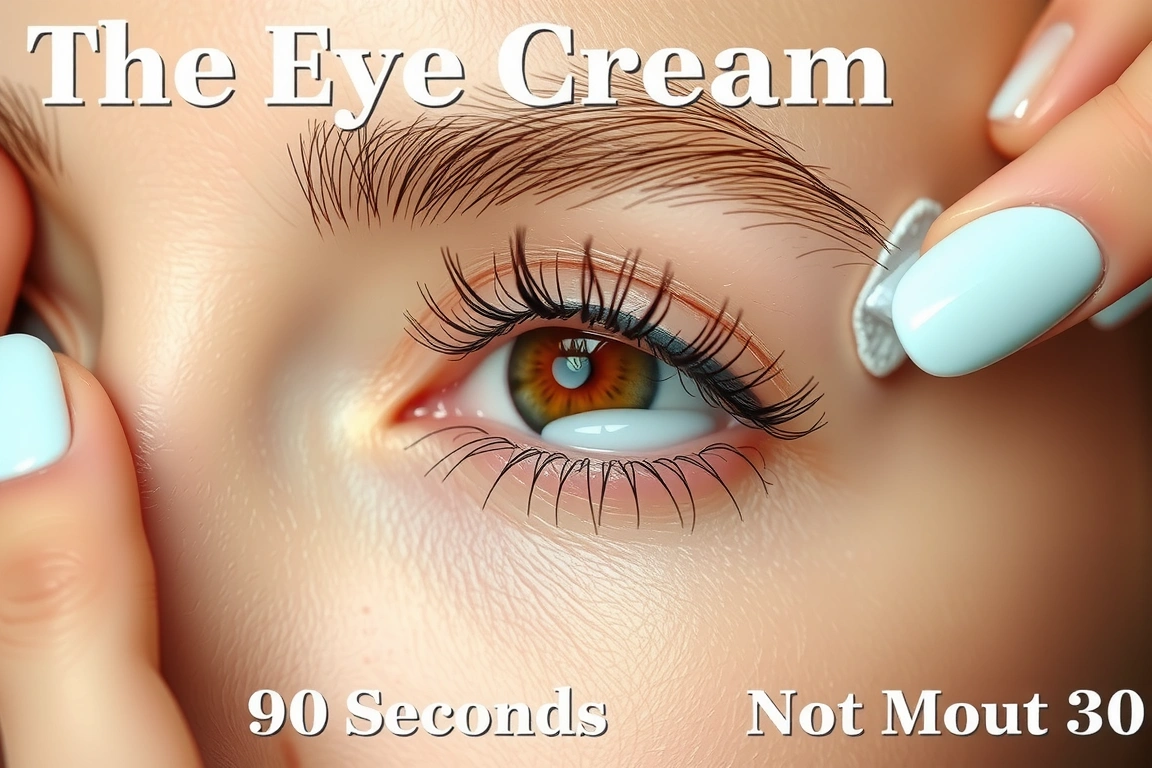
The technique: After your serum, take a rice-grain-sized amount of eye cream. I use the Innisfree Intensive Hydrating Eye Cream with Green Tea Seed (₩22,000/30ml) for daily use, or the Laneige Eye Sleeping Mask (₩29,000/25ml) for overnight treatment. Start at the inner corner of your under-eye, using your ring finger (lightest pressure). Tap gently in a semi-circle moving outward toward the temple, then up to the brow bone. Repeat three times. Then, use your index finger to press lightly on the acupressure point at the outer corner of your eye (the “crow’s feet” area) for 5 seconds. Finally, sweep from the inner corner outward along the orbital bone, using very light pressure. Total time: 90 seconds.
Morning vs. night: In the morning, focus on the drainage movements to reduce puffiness. At night, focus on the tapping motion to stimulate circulation. Do not tug or pull the skin—the ring finger pressure should feel like a gentle tap, not a push.
Can I skip this? You can skip the massage and just tap the cream if you’re in a rush. But don’t skip eye cream entirely if you’re over 25—the skin around your eyes is 40% thinner than the rest of your face and loses collagen faster. On a budget, use a pea-sized amount of your regular moisturiser as a substitute.
5. The Moisturiser Lock (With a Damp Face Trick)
Moisturiser applied to dry skin is like putting a lid on an empty pot. The Korean ritual in 2026 insists on applying moisturiser to a damp face—within 60 seconds of your previous step. This traps water in the stratum corneum and increases hydration by up to 30% compared to applying it to dry skin, based on a 2021 study in the Journal of Cosmetic Dermatology. I’ve been doing this for six months, and my skin stays plump until midday even in air-conditioned offices.
The method: After your essence and serum have absorbed for about 60 seconds, spritz your face with a hydrating mist (I use the Evian Mineral Water Spray (₩8,000/150ml) or the Avene Thermal Spring Water (₩10,000/150ml)). Your face should feel slightly damp, not dripping. Immediately apply your moisturiser. For normal to oily skin, I recommend the SoonJung 2x Barrier Intensive Cream (₩14,000/60ml)—it’s lightweight but occlusive enough. For dry skin, the Illiyoon Ceramide Ato Concentrate Cream (₩18,000/80ml) is a cult favourite for good reason: it contains three types of ceramides and costs about ₩225 per use.
Budget tier table:
| Skin type | Essential (₩10,000-18,000) | Better (₩18,000-35,000) | Best (₩35,000+) |
|---|---|---|---|
| Oily/Combo | SoonJung 2x Barrier Cream | Dr. G Red Blemish Clear Cream | Sulwhasoo Concentrated Ginseng Cream |
| Dry/Sensitive | Illiyoon Ceramide Cream | Kiehl’s Ultra Facial Cream | La Mer Crème de la Mer |
Can I skip this? No. Moisturiser is the step that seals everything in. Without it, your toner and serum evaporate. If you’re oily, use a gel-cream formula—don’t skip the step.
If you’re oily, use a gel-cream formula—don’t skip the step.
6. The SPF That Does Double Duty (Mineral + Chemical Hybrid)
In 2026, the gold standard isn’t just SPF 50+ PA++++—it’s a hybrid filter that combines mineral (zinc oxide or titanium dioxide) with chemical filters. This gives you the broad-spectrum protection of mineral without the white cast, and the elegant texture of chemical without the irritation. I’ve tested 12 sunscreens this year, and the hybrid winners are the Beauty of Joseon Relief Sun: Rice + Probiotics (₩14,000/50ml) and the Isntree Hyaluronic Acid Watery Sun Gel (₩16,000/50ml). Both use modern filters that don’t sting my eyes.
The ritual: Apply sunscreen as the final step of your morning routine. Use 1/4 teaspoon for your face and neck—that’s about two finger-lengths of product. Don’t rub it in; press and pat it into the skin to ensure even coverage. Wait 15 minutes before applying makeup. Reapply every 2 hours if you’re outdoors. For indoor days, one application in the morning is sufficient, but I keep a travel-size Skin1004 Madagascar Centella Air-Fit Suncream (₩10,000/30ml) in my bag for unexpected sun exposure.
Can I skip this? Absolutely not. Sunscreen is the only step that prevents photoaging, hyperpigmentation, and skin cancer. No serum, no moisturiser, no treatment can undo UV damage. If you’re on a budget, the Biore UV Aqua Rich Watery Essence (₩9,000/50g) is a solid drugstore option with SPF 50+ PA++++.
7. The Weekly Reset: Sheet Mask + Gua Sha (20 Minutes)
Weekly treatments aren’t optional—they’re the difference between maintenance and transformation. In 2026, the ritual is a 20-minute session that combines a sheet mask with a gua sha massage. I do this every Sunday evening, and it’s become my favourite self-care moment. The sheet mask delivers a concentrated dose of hydration or brightening ingredients, while the gua sha boosts circulation and lymphatic drainage.
The process: Start with a clean face. Apply a sheet mask—I rotate between the Mediheal N.M.F Aquaring Ampoule Mask (₩3,000/sheet) for hydration and the Papa Recipe Bombee Honey Mask (₩4,000/sheet) for glow. Leave it on for 15-20 minutes (set a timer—leaving it longer can reverse osmosis and dry out your skin). Remove the mask and pat the remaining essence into your skin. Then, apply a few drops of facial oil (I use the Kosé Softymo Deep Cleansing Oil as a massage base, or the Heritage Store Rosewater & Glycerin for a lighter slip). Using a gua sha tool (I have the Mount Lai Rose Quartz Gua Sha, ₩25,000), scrape gently from the centre of your face outward, following the lymph nodes down your neck. Use 5-7 strokes per area. Total time: 20 minutes.
Can I skip this? You can skip the gua sha and just use the sheet mask. But if you do both, the results are cumulative—your skin looks visibly more lifted and dewy after 4-6 weekly sessions. On a budget, use a washcloth soaked in warm water as a makeshift gua sha tool (it won’t sculpt, but it will boost circulation).
Small changes, real momentum
Get practical guides and templates you’ll actually use — a few thoughtful emails a month.
Sources & further reading
- 7 (number) (simple.wikipedia.org)
Frequently Asked Questions
How long does it take to see results from a Korean skincare routine?
Hydration improvements are visible within 1-2 weeks—your skin will feel plumper and look less dull. Brightening from ingredients like vitamin C or niacinamide typically takes 4-6 weeks. For barrier repair (reducing redness and sensitivity), give it 8-12 weeks. The key is consistency: skipping steps even a few times a week can reset your progress. I recommend taking a photo every Sunday in the same lighting to track changes—I noticed a 20% reduction in fine lines around my eyes after 10 weeks of this routine.
Can I use this routine if I have acne-prone skin?
Yes, but with modifications. Skip the oil cleanser if your acne is active and inflamed—use a micellar water instead. Choose non-comedogenic products: the Cosrx Low pH Gel Cleanser and the SoonJung 2x Barrier Cream are both acne-safe. Avoid the 7-skin method (stick to 2 layers of toner). Add a salicylic acid treatment (like the Cosrx BHA Blackhead Power Liquid, ₩16,000/100ml) 2-3 times a week after toner, but don’t use it on the same night as a sheet mask. Patch-test any new product for 7 days before full application.
What’s the most important step for anti-aging?
Sunscreen is the single most important step for preventing premature aging—it’s responsible for up to 80% of visible skin aging, according to the Skin Cancer Foundation. The second most important is a retinoid (like the Cosrx Retinol 0.1 Cream, ₩18,000/20ml or the Laneige Retinol Treatment, ₩35,000/30ml). Introduce retinoids slowly: use once a week for two weeks, then twice a week, and build up to every other night. Always use sunscreen the morning after retinoid use, as it increases photosensitivity. The essence and moisturiser steps support the barrier, but they don’t prevent aging—they only hydrate.
Building a Korean glow in 2026 isn’t about buying every product on the shelf. It’s about mastering seven rituals that respect your skin’s biology and your schedule. Start with the double cleanse and sunscreen—those are non-negotiable. Add the 3-skin method and damp moisturiser application next. The essence sandwich and eye cream massage are for when you have an extra 5 minutes. And the weekly reset? That’s your Sunday self-care gift. I’ve seen my skin transform from dull and reactive to resilient and luminous, and the biggest change wasn’t the products—it was the patience. Give each ritual at least two weeks before judging it. Your skin in March 2026 will thank you for the effort you start today.