

When I started logging my skincare like a habit tracker—same grid I use for water intake and gratitude lists—one number surprised me more than anything else: it took 11 weeks, not 11 days, before the post-breakout marks on my cheeks actually faded on camera. Not one product did that. A stacked, ordered routine did, and the order matters more than most brands admit. Korean skincare isn’t a 10-step marketing gimmick invented to sell you more bottles; it’s a layering logic built around thin-to-thick texture and pH, first documented for Western readers in Charlotte Cho’s 2015 book “The Little Book of Skin Care.” In 2026, with ingredient transparency laws tightening in the EU and Korea’s own K-BPI cosmetic standards, you can actually verify what’s in these formulas before you buy them. Here’s the exact order I use, why each step exists, and where you can cut cost without cutting results.
5 min read
In This Article
- Who This Korean Skincare Routine Is For (and Who Should Skip Steps)
- The Korean Skincare Routine Order: 7 Steps, In Order
- Step 1: Oil Cleanser — Dissolving the Day’s Buildup
- Step 2: Water-Based Cleanser — Finishing the Double Cleanse
- Step 3: Toner — Rebalancing and Prepping
- Step 4: Essence — The Step Everyone Skips (and Shouldn’t)
- Step 5: Serum or Ampoule — Treating Your Actual Concern
Key Takeaways
- Who This Korean Skincare Routine Is For (and Who Should Skip Steps)
- The Korean Skincare Routine Order: 7 Steps, In Order
- Step 1: Oil Cleanser — Dissolving the Day’s Buildup
- Step 2: Water-Based Cleanser — Finishing the Double Cleanse
Who This Korean Skincare Routine Is For (and Who Should Skip Steps)
This routine is built for adults dealing with dullness, mild breakouts, uneven texture, or early fine lines—basically the 20s-through-40s crowd who wants glow without a 12-product shelf. If you’re under 18, dermatologists including the American Academy of Dermatology generally recommend a simplified three-step routine: gentle cleanser, moisturizer, SPF 30+. Skip the double cleanse and acid toners until skin barrier development stabilizes, usually mid-to-late teens.

If you have diagnosed rosacea, active eczema, or you’re currently using prescription tretinoin or isotretinoin, talk to your dermatologist before adding exfoliating toners or vitamin C serums—layering actives on already-compromised barrier function is the single most common mistake I see in skincare forums like r/AsianBeauty. For everyone else, the full 7-step version works; you’re just choosing how many steps you can realistically maintain on a Tuesday night at 11 p.m.
What you need on hand before you start: a soft washcloth or reusable cotton rounds, a small notebook or habit tracker (I use a simple monthly grid—one box per product per day), and a timer, because the biggest mistake beginners make is rushing absorption time between steps.
For everyone else, the full 7-step version works; you’re just choosing how many steps you can realistically maintain on a Tuesday night at 11 p.m.
The Korean Skincare Routine Order: 7 Steps, In Order
- Oil cleanser (PM only)
- Water-based cleanser (AM and PM)
- Toner
- Essence
- Serum or ampoule
- Moisturizer
- Sunscreen (AM) or sleeping pack (PM)
The rule of thumb from Korean dermatology clinics I’ve seen cited repeatedly: apply thinnest-to-thickest texture, water-based before oil-based (unless it’s the initial cleanse), and always wait 30–60 seconds between actives so each layer actually absorbs instead of pilling. Skip the order and you’ll get that gray, ashy pilling effect under makeup—I’ve done it, it’s not cute.
Step 1: Oil Cleanser — Dissolving the Day’s Buildup
An oil-based cleanser breaks down sunscreen, sebum, and makeup because “like dissolves like”—lipophilic residue needs a lipophilic solvent, not soap. Banila Co Clean It Zero Cleansing Balm ($24 for 100ml at Sephora) and Heimish All Clean Balm ($22 for 120ml) are the two most-repurchased balms on StyleKorean’s bestseller list. Massage 1 pump for 60 seconds on dry skin before water touches your face; adding water too early breaks the oil’s grip on sunscreen film.
Can I skip this? If you don’t wear sunscreen or makeup that day, yes—skip straight to Step 2. If you wore SPF, skipping the oil cleanse means roughly 20–30% of your sunscreen film stays on skin overnight, according to formulator discussions on the r/SkincareAddiction FAQ wiki, which can clog pores over weeks. On a tight budget, plain grapeseed or sunflower oil ($6–8 at any grocery store) works almost identically to a $24 balm—the fragrance and texture are the only real upgrade you’re paying for.
Can I skip this? Hydrating toner, no—it takes 15 seconds and meaningfully improves how well your essence absorbs. Exfoliating toner, yes, entirely optional and concern-specific.
Exfoliating toner, yes, entirely optional and concern-specific.
Step 2: Water-Based Cleanser — Finishing the Double Cleanse
This step removes water-soluble debris—sweat, dead skin cells, residual oil film—that the balm leaves behind. COSRX Low pH Good Morning Gel Cleanser ($13 for 150ml) is formulated around pH 5.0–5.5, matching skin’s natural acid mantle (typically pH 4.5–5.5), which matters because most Western foaming cleansers sit at pH 9–10 and strip the barrier over time.
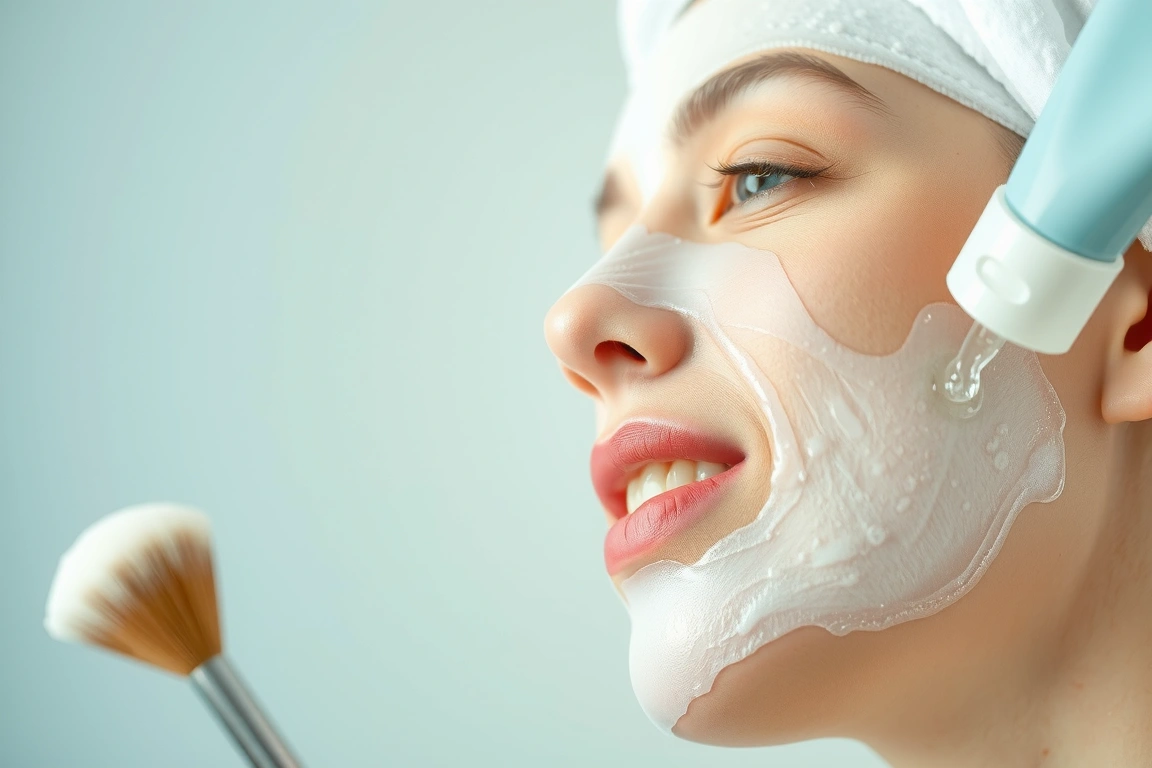
Can I skip this? No—this is the one non-negotiable step, morning and night, even on minimal routine days. Budget pick: Cetaphil Gentle Skin Cleanser ($10 for 236ml) is not Korean but is pH-balanced and works fine as a stand-in if COSRX isn’t available locally.
Step 3: Toner — Rebalancing and Prepping
Toner does two jobs depending on formula: hydrating toners (like Klairs Supple Preparation Unscented Toner, $22 for 180ml) rebalance pH and prime skin to absorb the next layers; exfoliating toners like COSRX AHA 7 Whitehead Power Liquid ($17, 100ml, 7% glycolic acid) or COSRX BHA Blackhead Power Liquid ($17, 100ml, 4% betaine salicylate) chemically exfoliate 2–3 nights a week max.
I made the mistake of using the AHA toner nightly for two straight weeks in my first month; my skin got flaky and tight by day 10. Start at twice weekly and build up—dermatology guidance on AHA/BHA use generally recommends starting low-frequency and increasing gradually over 4–6 weeks.
Can I skip this? Hydrating toner, no—it takes 15 seconds and meaningfully improves how well your essence absorbs. Exfoliating toner, yes, entirely optional and concern-specific.
Step 4: Essence — The Step Everyone Skips (and Shouldn’t)
Essence sits between toner and serum in viscosity—thinner than serum, more concentrated than toner. Missha Time Revolution The First Treatment Essence ($52 for 150ml, in market since the early 2010s) contains roughly 90% fermented yeast filtrate (Saccharomyces/rice ferment), which in small clinical formulation studies has shown mild humectant and antioxidant properties, though most of the “miracle” marketing outpaces the actual peer-reviewed evidence.
Budget alternative: COSRX Advanced Snail 96 Mucin Power Essence ($18 for 100ml) uses 96% snail secretion filtrate. Some published research on snail secretion filtrate (from species like Cryptomphalus aspersa) explores wound-healing and hydration properties, but most of that data comes from cosmetic-industry-funded trials rather than independent dermatology journals—treat the “repairs skin overnight” claims with proportional skepticism.
Can I skip this? Yes, if you’re on a tight budget or short on time—it’s the most skippable step of the seven, with the smallest measurable difference in a typical 4-week trial.
Step 5: Serum or Ampoule — Treating Your Actual Concern
This is where you match product to problem. For hyperpigmentation and uneven tone, Beauty of Joseon Glow Deep Serum: Propolis+Niacinamide ($17 for 30ml) delivers 2% niacinamide plus 70% propolis extract. Niacinamide’s mechanism is well documented: it inhibits melanosome transfer to keratinocytes and boosts ceramide synthesis, per research by Bissett, Oblong, and Berge published in Dermatologic Surgery (2005), which measured visible improvement in hyperpigmentation and barrier function over 8–12 weeks of twice-daily use.
For texture and mild acne, Some By Mi AHA-BHA-PHA 30 Days Miracle Serum ($22 for 50ml) combines three acid types at lower percentages than standalone toners. For brightening with more aggressive results, COSRX The Vitamin C 23 Serum ($24 for 20ml) uses 23% ascorbic acid—strong enough that I only use it three nights a week, and I always patch test a new vitamin C batch since ascorbic acid oxidizes and can irritate at that concentration.
Can I skip this?
Small changes, real momentum
Get practical guides and templates you’ll actually use — a few thoughtful emails a month.
Sources & further reading
- How (TV series) (en.m.wikipedia.org)